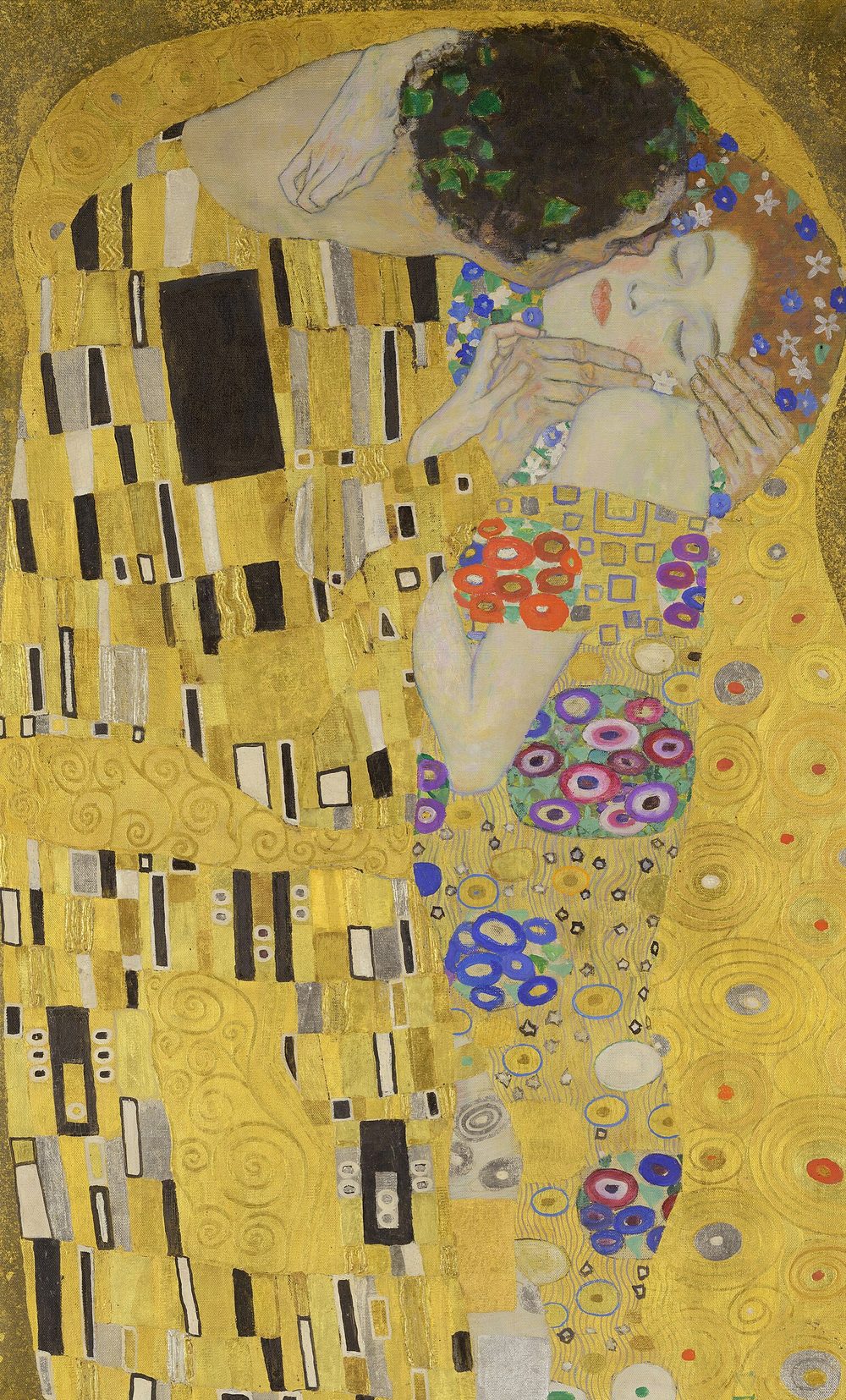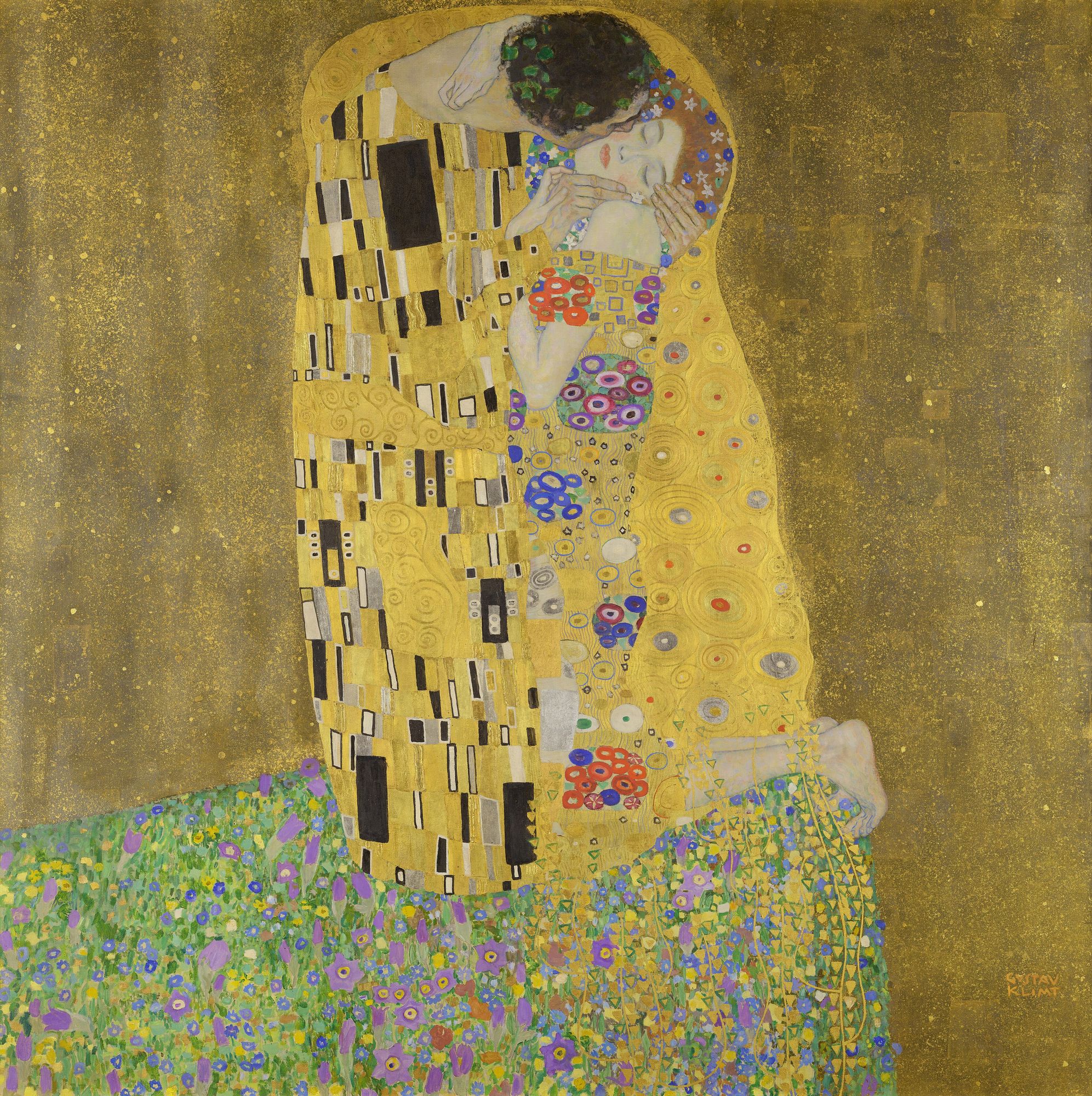
Gustav Klimt, The Kiss (1907 to 1908)

Project Tesseract Nº 01 · Art × Gastronomy × Science

Klimt

Art and Science

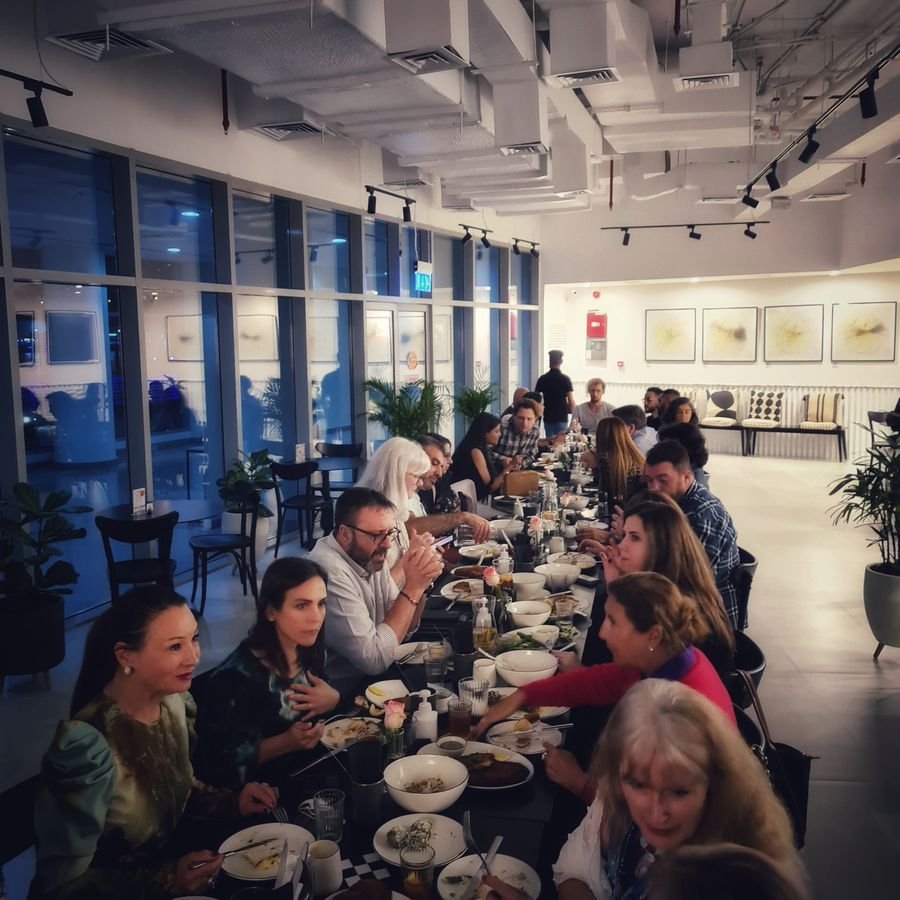
Neuroscience and the role of the unconscious in art and the brain. An evening of dinner, art and conversation on Gustav Klimt, Sigmund Freud and Eric Kandel's The Age of Insight.

Wednesday 9 February 20227:30 pm to 9:30 pm
Enter Vienna ↓

Vienna, 1890 to 1918

A city where art and science sat at the same table.

Between 1890 and 1918, Vienna was a hotbed of science, art and culture, like Florence during the Renaissance.

Artists, writers, thinkers and scientists across biology, medicine and psychoanalysis met in intellectual salons and soirées, and influenced each other in ways that had a lasting impact on modern European culture.

Gustav Klimt, too, was caught up in this intellectual whirlwind of science and art.

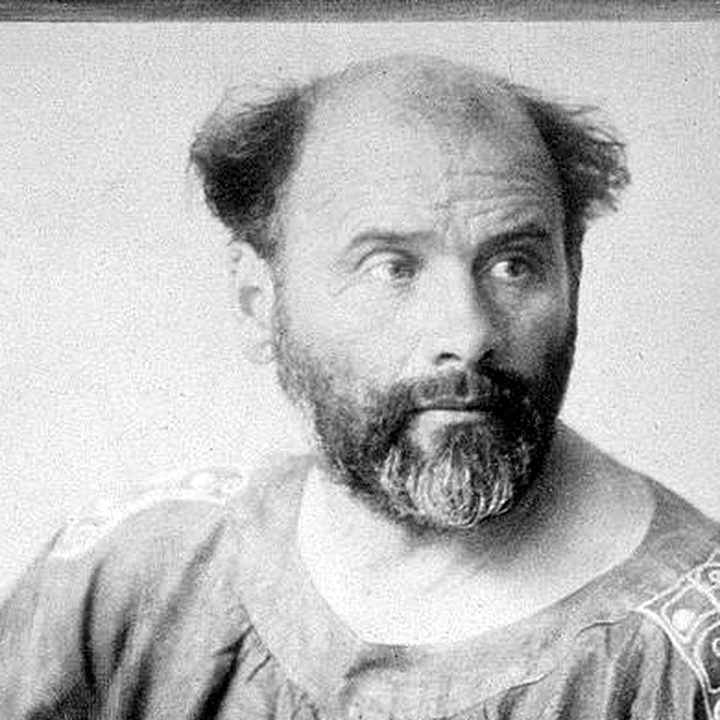
Gustav Klimt

Gustav Klimt

1862 to 1918 · The painter

Gold, pattern and the inner life, painted on the surface of things.

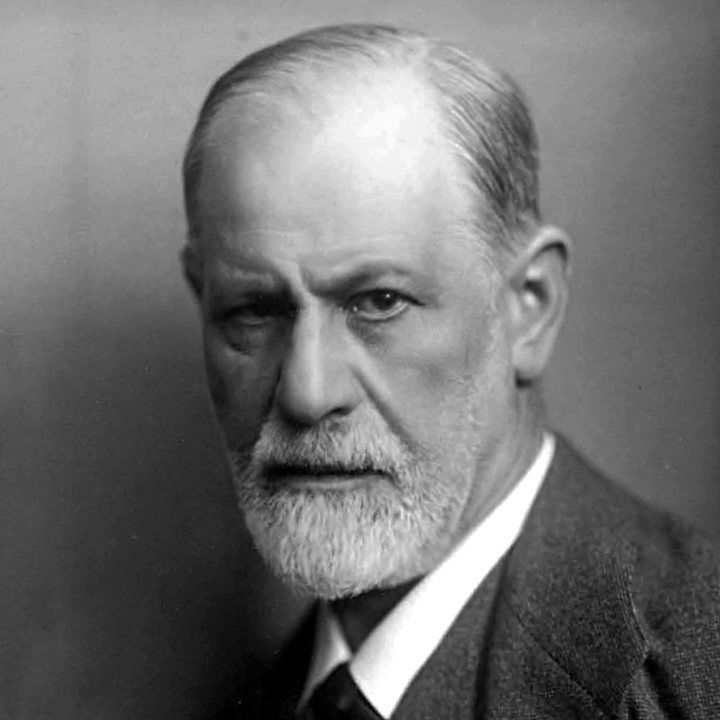
Sigmund Freud

Sigmund Freud

1856 to 1939 · The analyst

Dreams, desire and the unconscious, mapped from a consulting room in the same city.

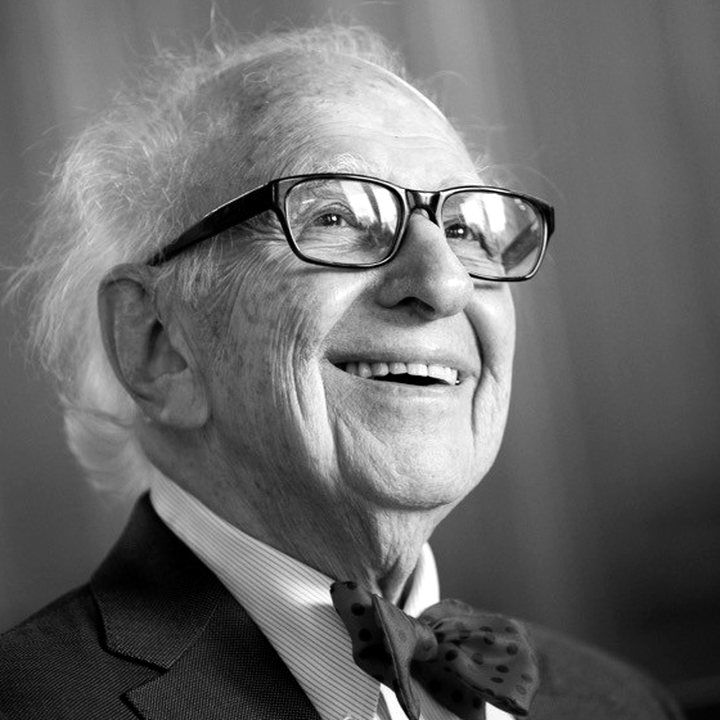
Eric Kandel

Eric Kandel

Born 1929 · The neuroscientist

A century later, he asked what happens in the brain when we look at Klimt.

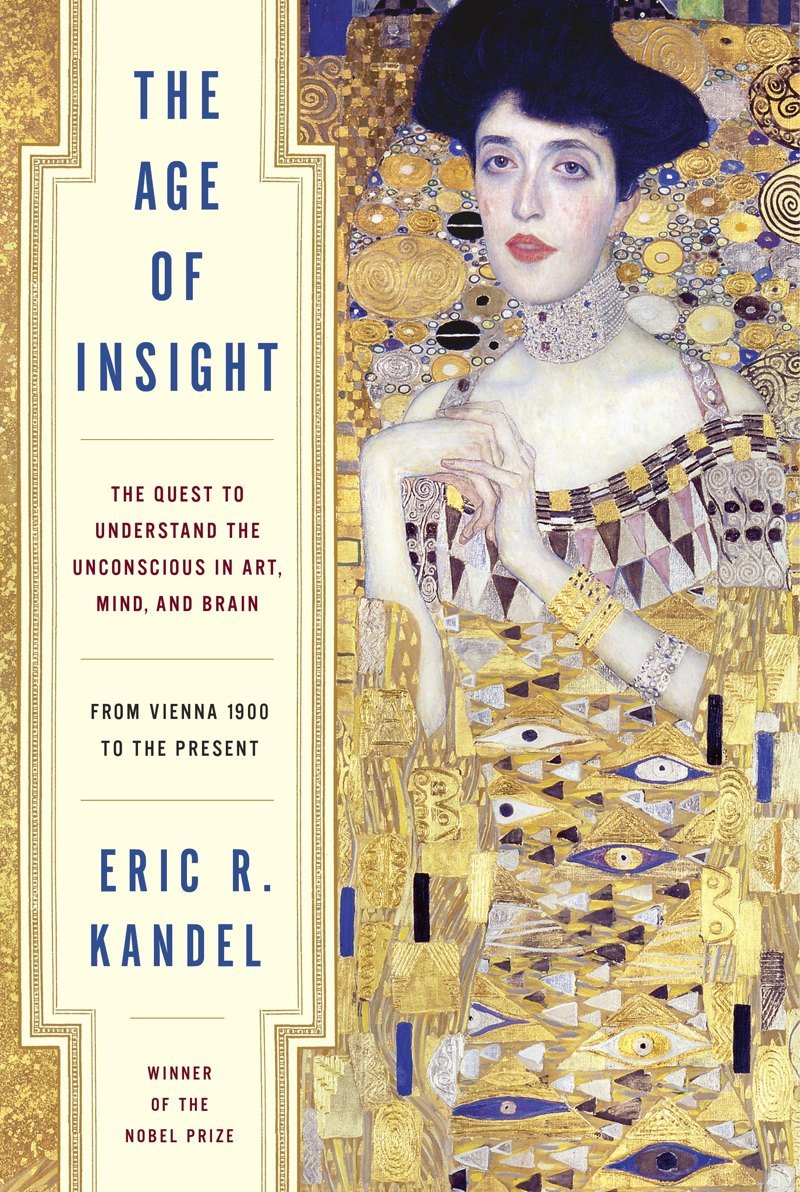
Cover of The Age of Insight by Eric R. Kandel

The book behind the evening

The Age of Insight

The Quest to Understand the Unconscious in Art, Mind, and Brain, from Vienna 1900 to the Present

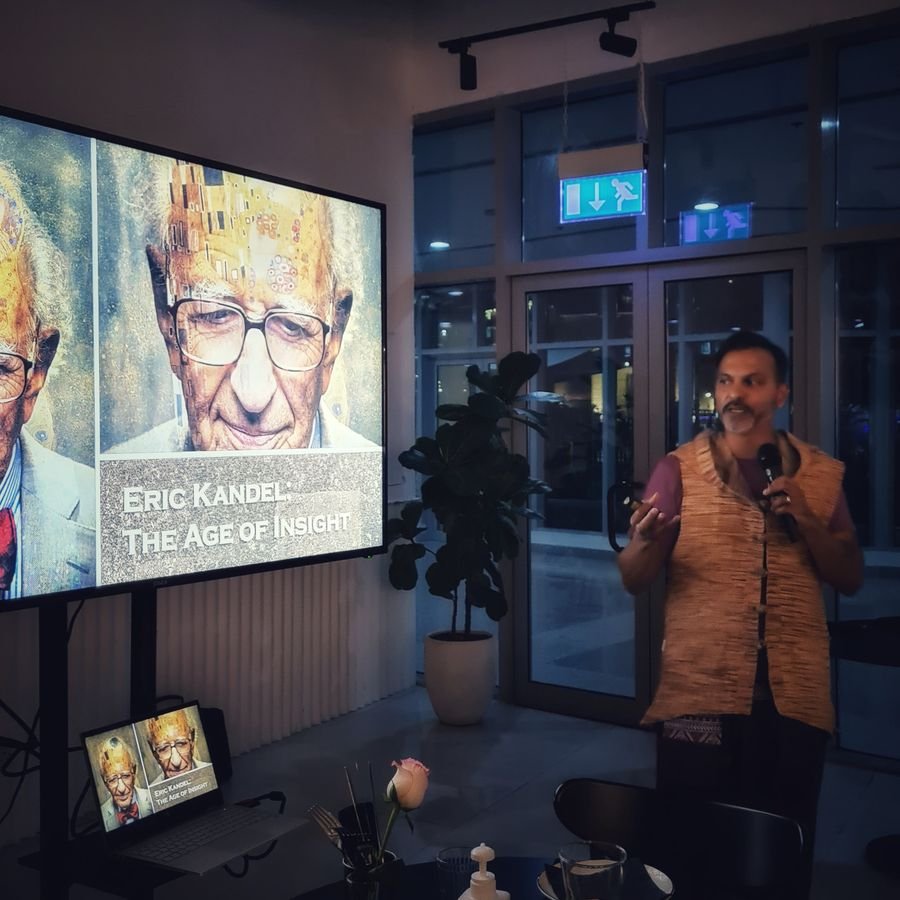
Eric Kandel's book had a seminal influence on this evening. Its subtitle is almost our programme: the unconscious, in art, in the mind and in the brain, starting in Klimt's Vienna.

Kandel was born in Vienna in 1929 and fled the Nazis as a boy. He won the Nobel Prize in 2000 for showing how memories are stored in nerve cells. Then he went back, in a book, to the city he had lost, and asked why its painters, doctors and writers all turned inward at the same moment.

Eric R. Kandel · Random House · 2012

I

Beneath the surface

In 1900 the Vienna School of Medicine, led by Carl von Rokitansky, taught doctors to look beneath the skin for the truth of an illness. Kandel shows Freud, Arthur Schnitzler and the painters doing the same with the mind.

II

Three painters

Klimt, Oskar Kokoschka and Egon Schiele each tried to paint the inner life: desire, fear, ageing and death, the things polite Vienna did not say.

III

The beholder's share

From the art historian Alois Riegl, carried on by Ernst Kris and Ernst Gombrich: a painting is only complete when a viewer brings memory and feeling to it.

IV

Then into the brain

The second half of the book follows that idea into modern neuroscience: how the brain sees faces and bodies, and how emotion and empathy answer them.

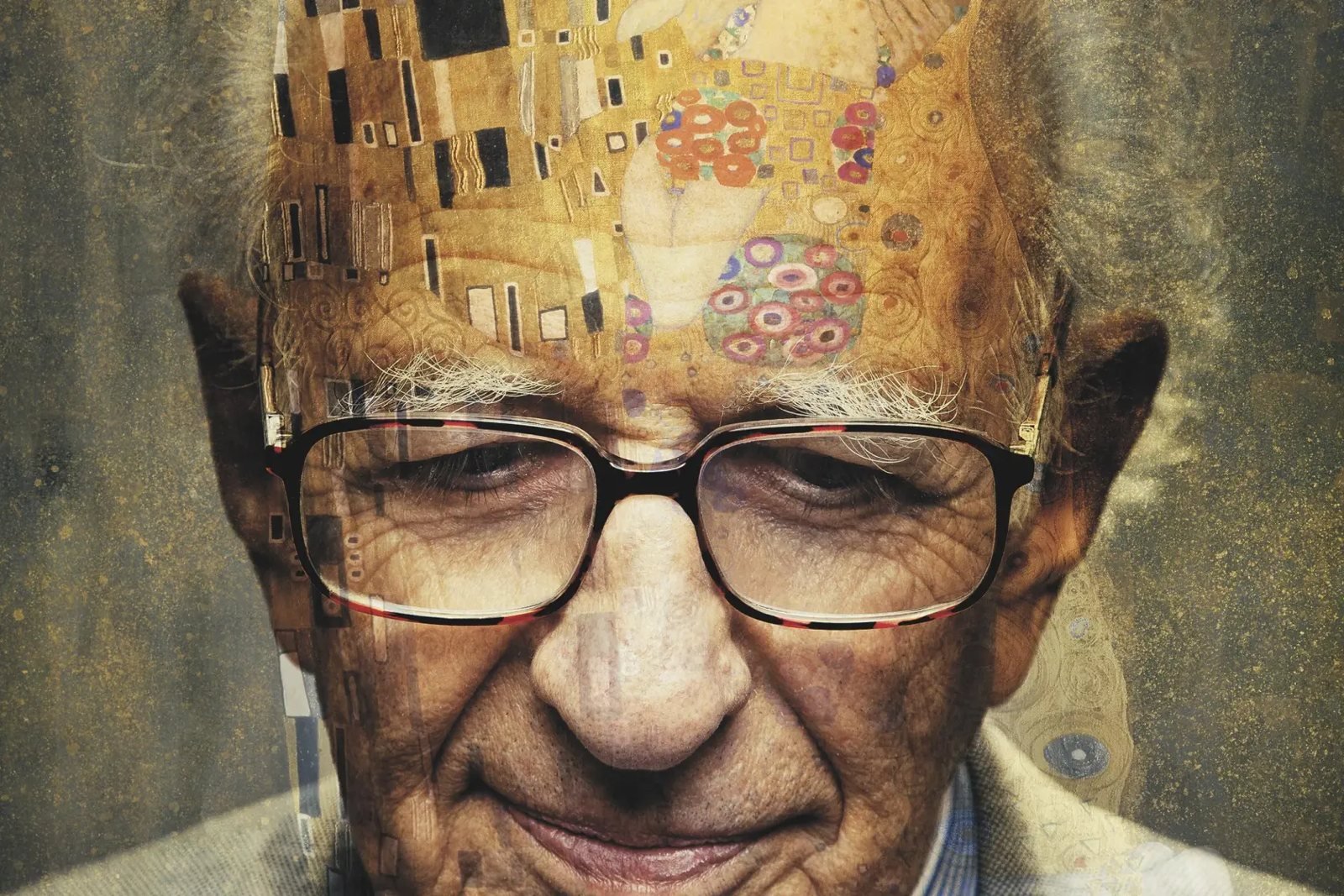
Eric Kandel, with Klimt's patterns over his face

Eric Kandel

From the sea slug's memory to Klimt's gold.

The same scientist who traced memory in the nerve cells of a sea slug asks what happens in our own brains when we stand in front of Adele, Judith and The Kiss. That question ran through the whole evening.

What you would have heard at the table

Six things worth knowing

01

Gold ran in the family

Klimt's father, Ernst, was a gold engraver. Gold was in the house long before it was on the canvas.

02

Ravenna, 1903

Klimt travelled to Ravenna and saw its Byzantine mosaics. The flat, glittering gold of his golden phase follows soon after.

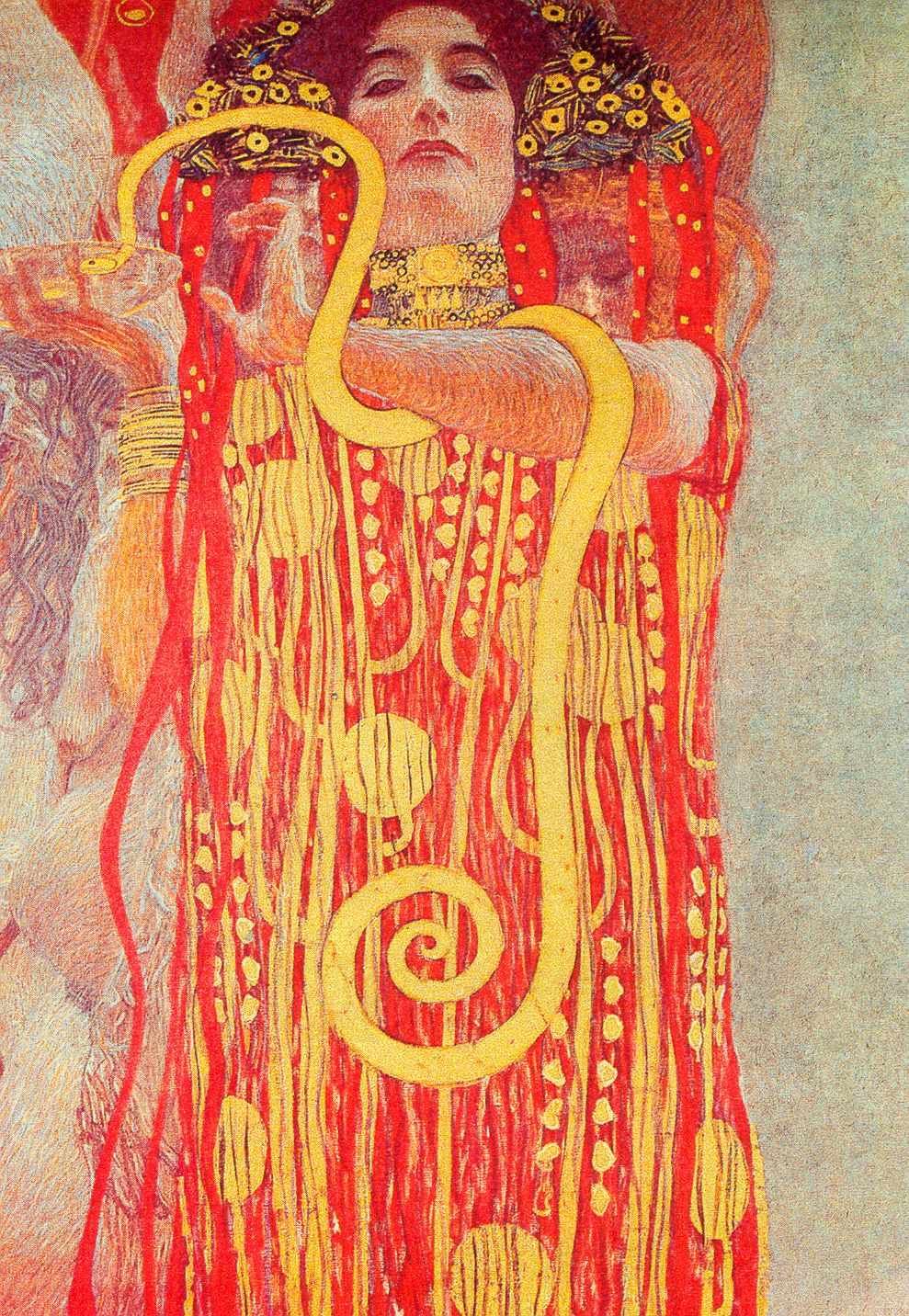
Gustav Klimt, Hygieia, detail from the lost painting Medicine
Hygieia, from the lost painting Medicine

03

To every age its art

In 1897 Klimt co-founded the Vienna Secession and became its first president. Its motto: “To every age its art, to art its freedom.”

04

The dream book

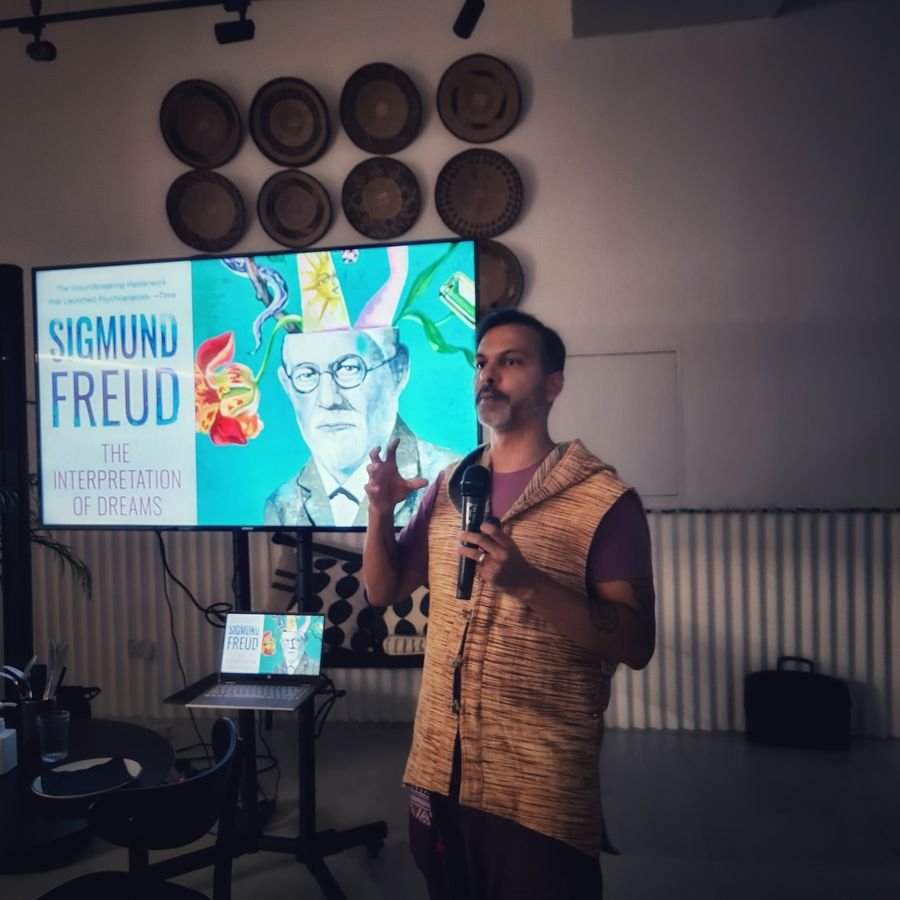
Freud's The Interpretation of Dreams appeared in November 1899, dated 1900: the same years Klimt was painting for the University of Vienna.

05

The lost paintings

Klimt's ceiling paintings for the University (Philosophy, Medicine, Jurisprudence) caused a scandal. All three burned at Schloss Immendorf in 1945. Hygieia, from Medicine, survives only in photographs.

06

A scientist comes home

Eric Kandel was born in Vienna in 1929 and fled in 1939. In 2000 he won the Nobel Prize for showing how memories are stored in nerve cells, then wrote The Age of Insight (2012) about the Vienna he had left.

The programme

One evening, served in courses.

Meet and greet

Introduction to Gustav Klimt: art and science

Appetisers

Analysis of science symbols in Klimt's art

Main course

Video: Klimt

Dessert

An operatic performance by Paul Bester

The four discussions

Four paintings, four doors into the mind.

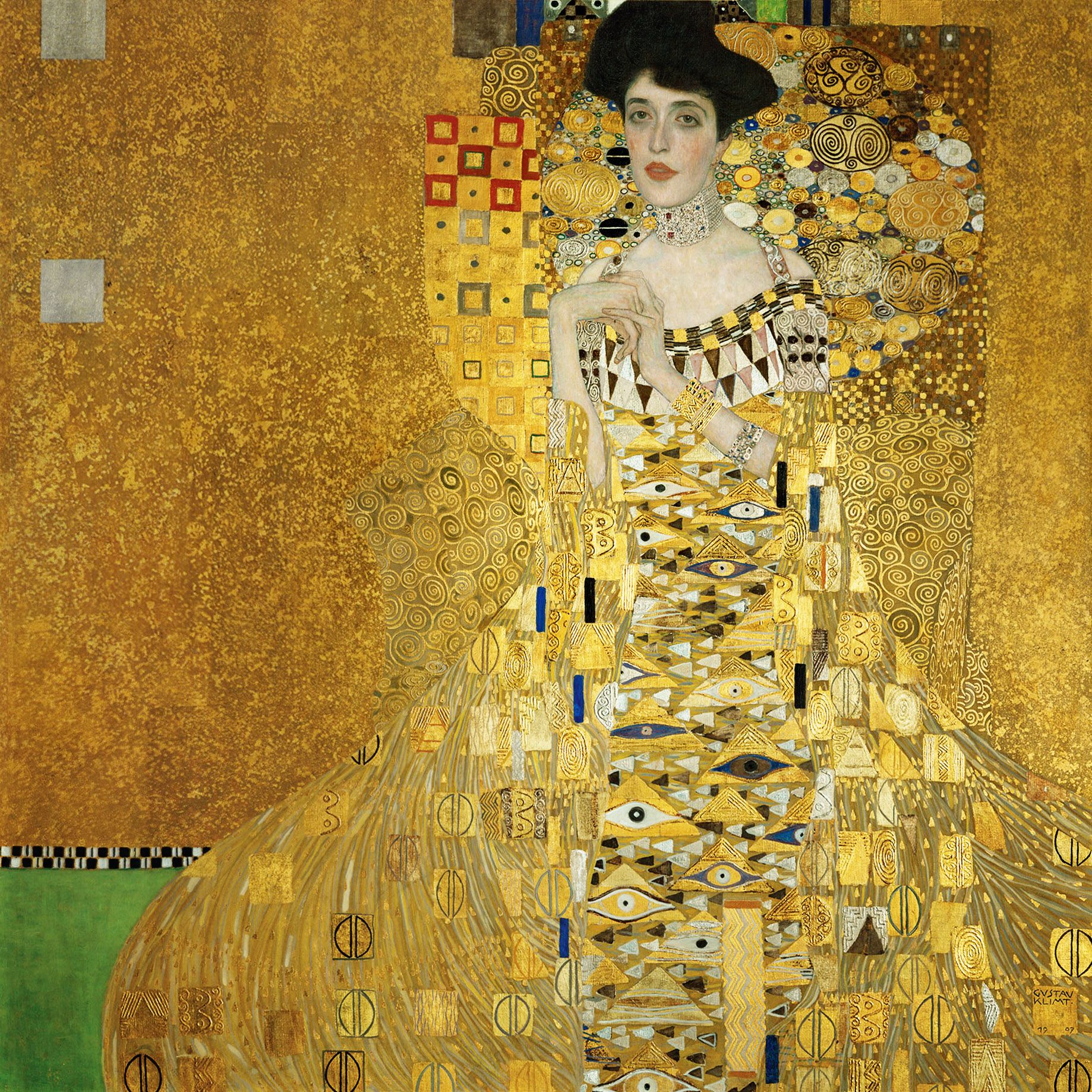
Gustav Klimt, Portrait of Adele Bloch-Bauer I (1907)

Discussion 1 of 4

Representations of the erotic

Portrait of Adele Bloch-Bauer I · 1907

Look for the eyes. Hidden in the gold of Adele's dress are eye shapes borrowed from Egyptian art, gazing back at you while she gazes past you.

The painting has its own drama. Seized by the Nazis, it was returned to Adele's niece Maria Altmann in 2006 after a case that reached the US Supreme Court. It now hangs in the Neue Galerie, New York.
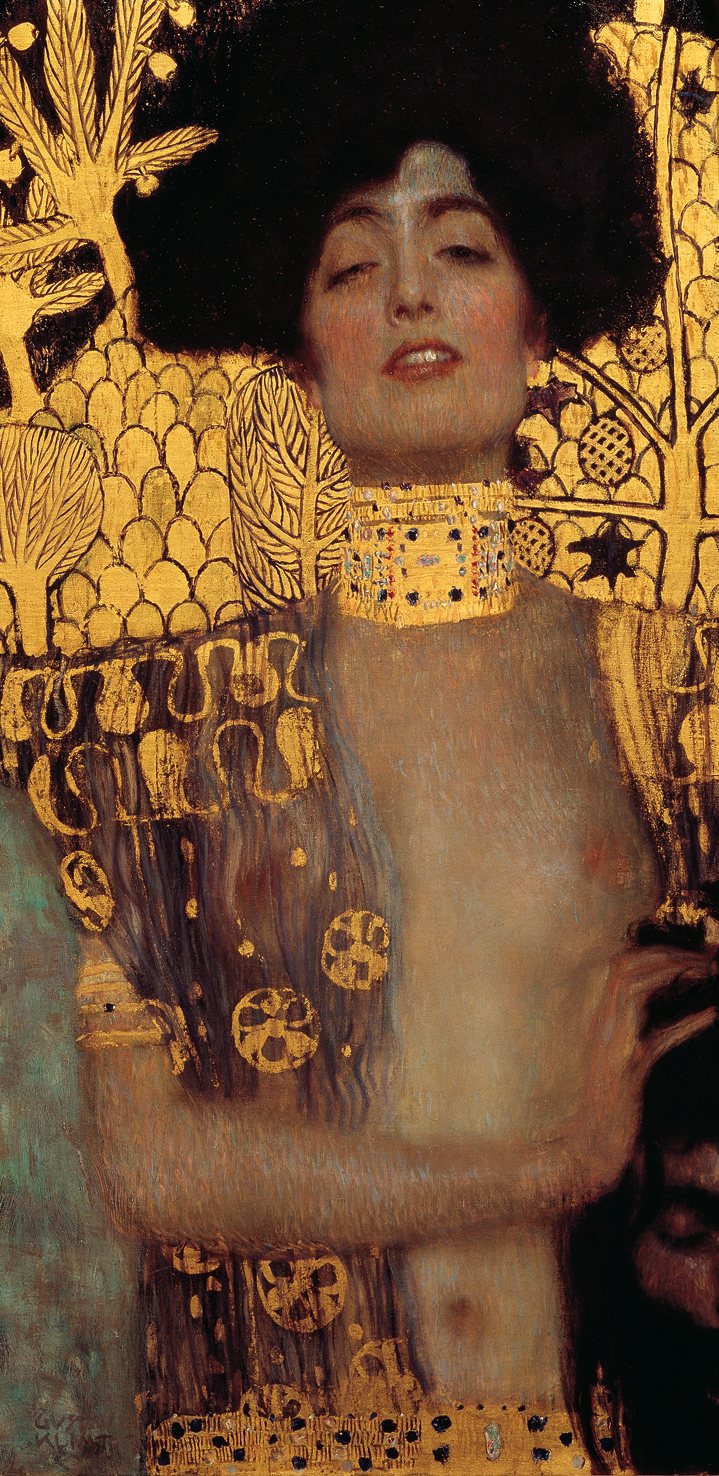
Gustav Klimt, Judith (1901)

Discussion 2 of 4

Dreamscapes and the subconscious

Judith · 1901

Judith has just beheaded Holofernes, yet her face is caught between trance and pleasure, and his head barely enters the frame. Her gold collar cuts her head from her body, an echo of the act itself.

Desire and death fused in one gaze: the pairing Freud would later name Eros and Thanatos.

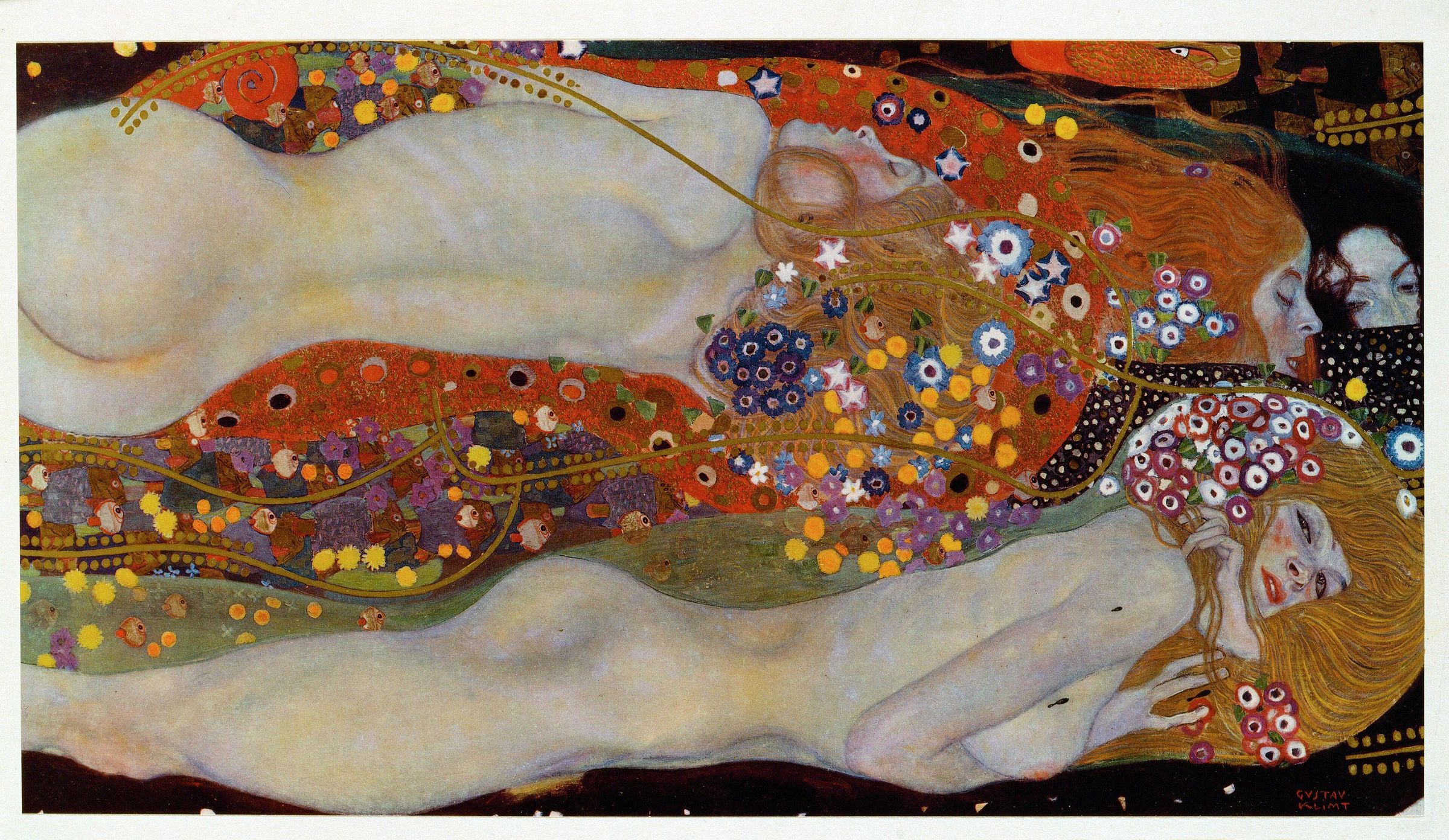
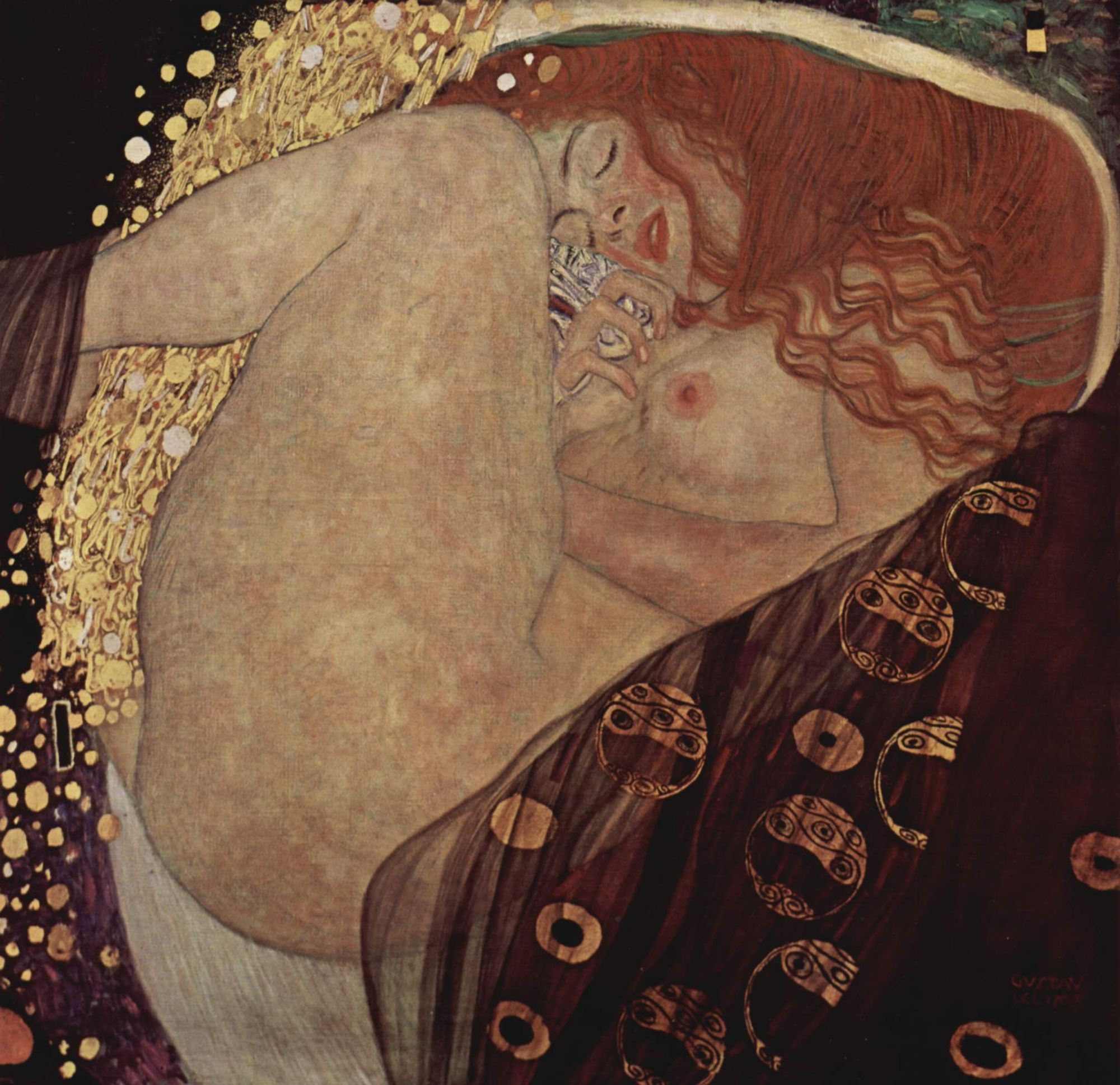
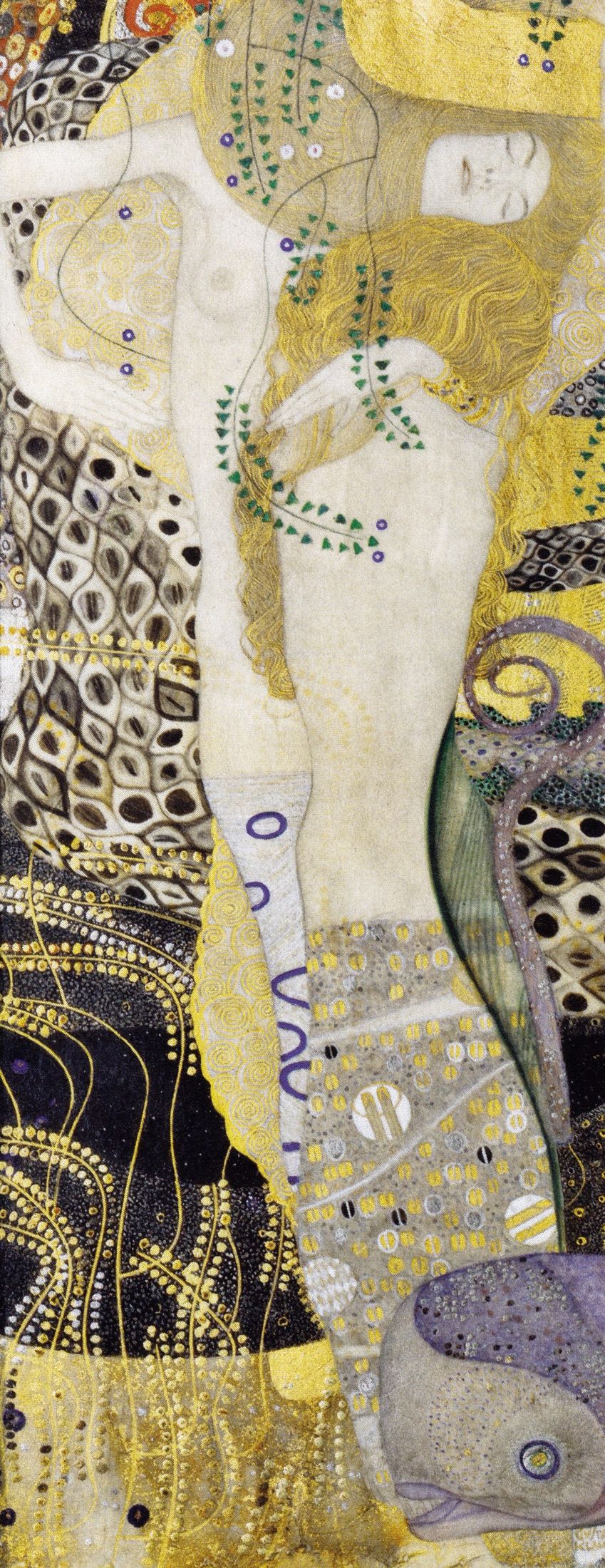
Gustav Klimt, Water Serpents I (1904 to 1907)

Discussion 3 of 4

Elements of life and death

Water Serpents I · 1904 to 1907

Bodies drift without weight or ground, the way they do in dreams. Look at the small forms floating in the golden water around them.

Eric Kandel reads shapes like these in Klimt as cells and early embryos: the beginning of life, painted beside a stillness close to sleep, or death.

Gustav Klimt, Water Serpents II (1904 to 1907)

Discussion 4 of 4

Myth and the unconscious mind

Water Serpents II · 1904 to 1907

Klimt borrowed water nymphs from myth, much as Freud borrowed Oedipus from Sophocles.

For both men, myth was a language for the desires people would not say out loud.

Gustav Klimt, The Kiss, detail
his robeher robe

The science in the gold

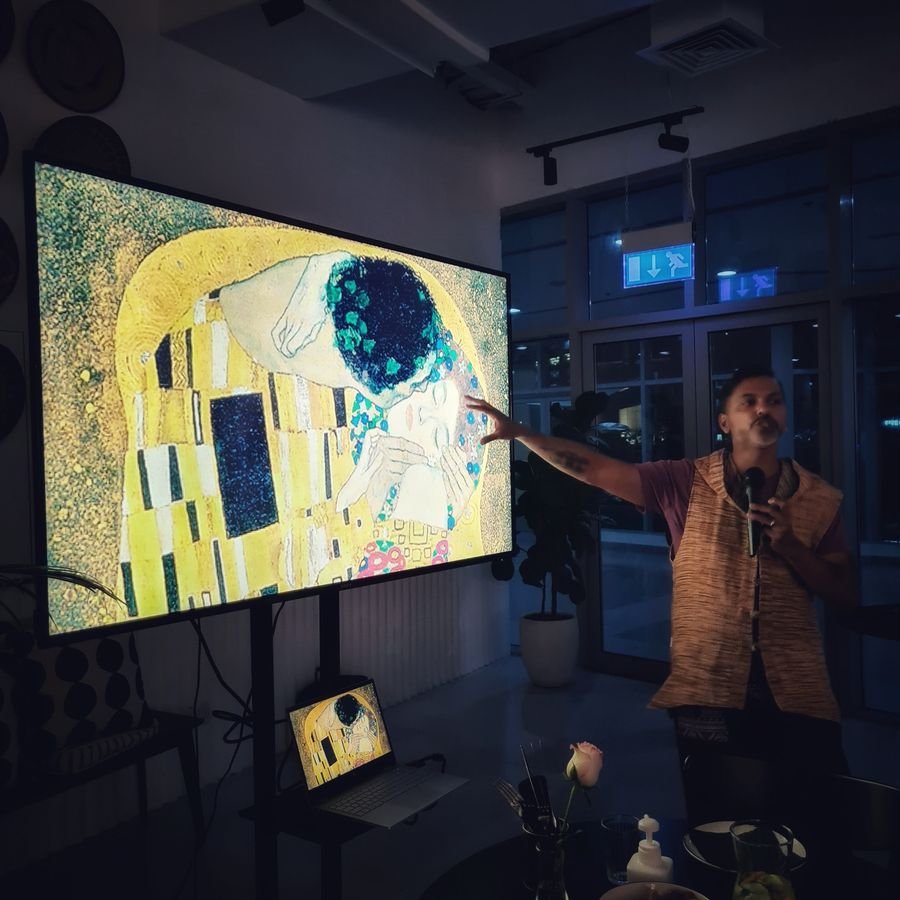
Look again at The Kiss.

His robe is built from upright black, white and gold rectangles. Hers is made of circles, ovals and flowers.

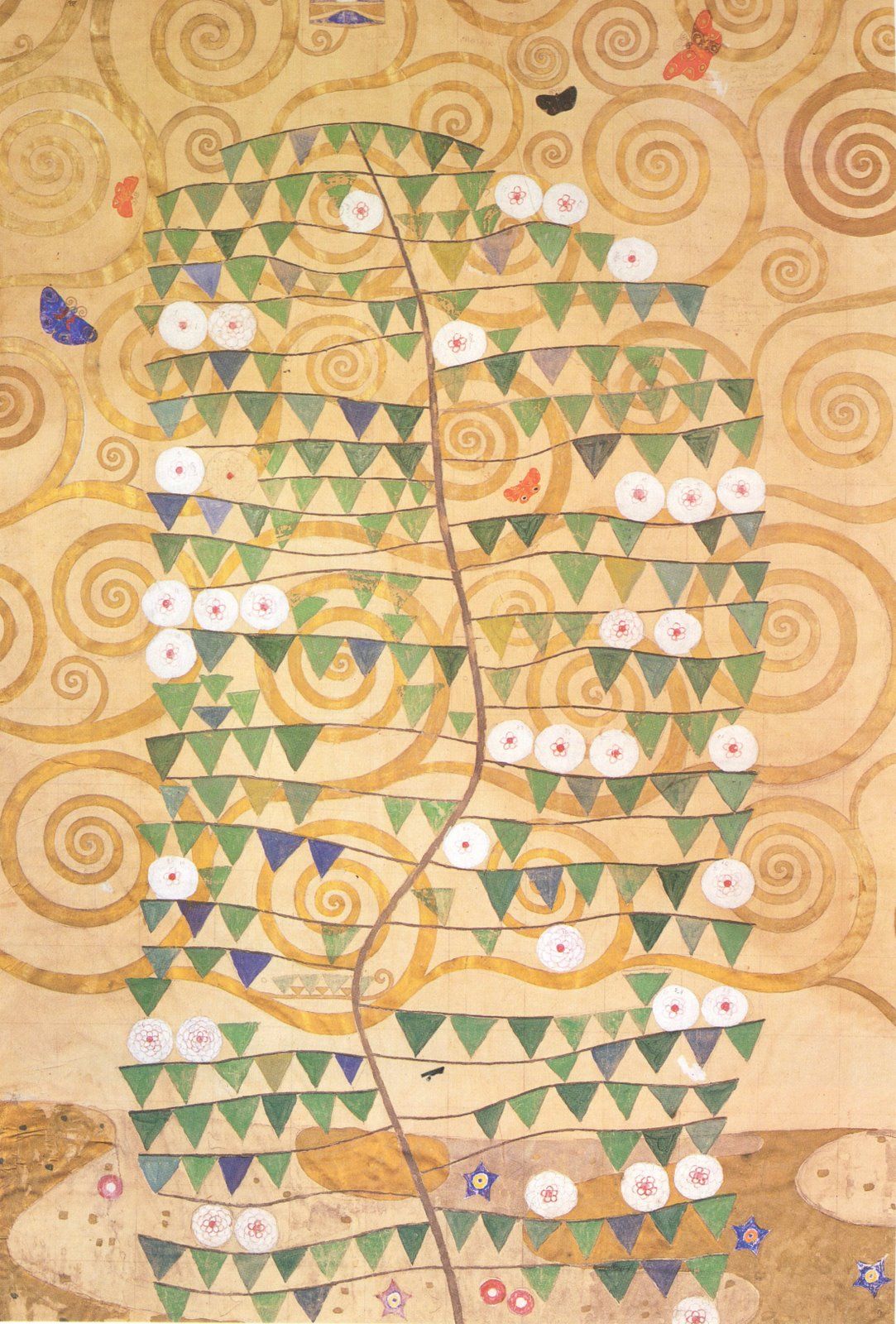
In The Age of Insight, Kandel argues these are more than decoration. Through the salon of Berta Zuckerkandl, whose husband Emil was a leading anatomist, Klimt met the biology of his day, and folded its images, sperm-like rectangles, egg-like ovals, dividing cells, into the ornament.

The Kiss (1907 to 1908) was bought by the Austrian state before it was even finished. It still hangs in the Belvedere, Vienna.

The beholder's share

A painting is finished in your brain.

Kandel builds on an idea from the Viennese art historians Alois Riegl and Ernst Gombrich: every viewer completes the picture from their own memories and feelings. Our brains read faces before anything else and answer them with emotion. Against Klimt's flat, glittering gold, the faces are the only things that look alive, so the eye goes straight to them, and the feeling follows.

Wednesday 9 February 2022

The night.

Dinner, talk and music, in Klimt's colours.

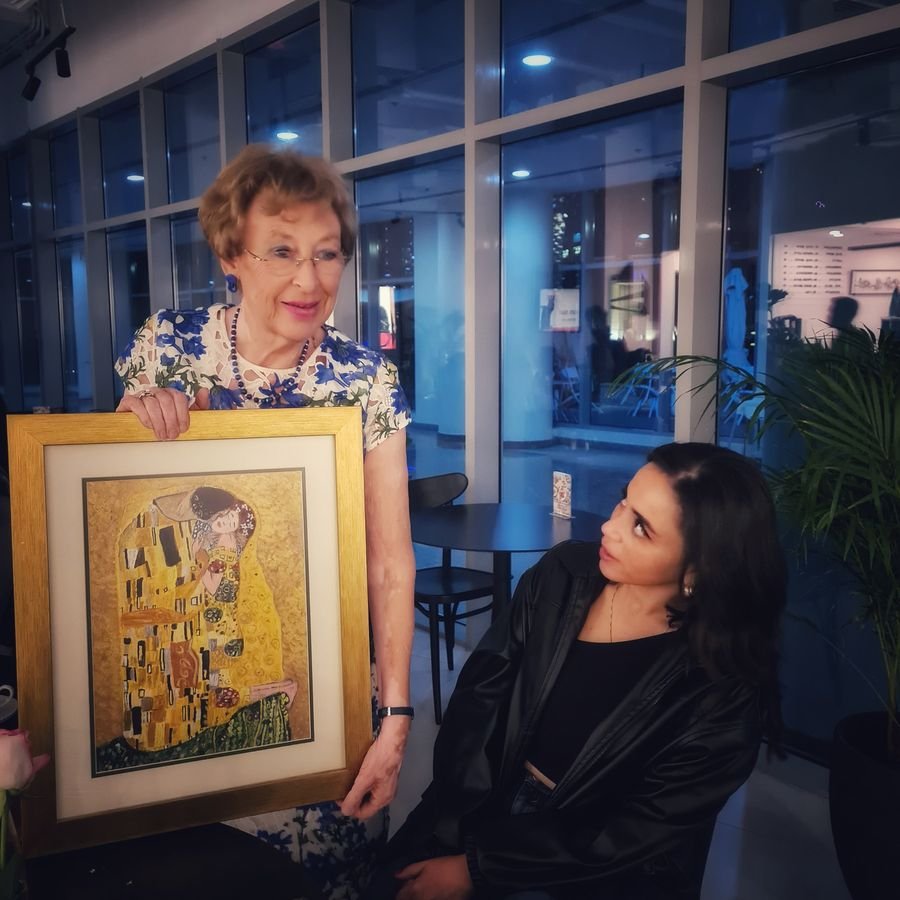
A guest holds a framed print of The Kiss at the Klimt evening
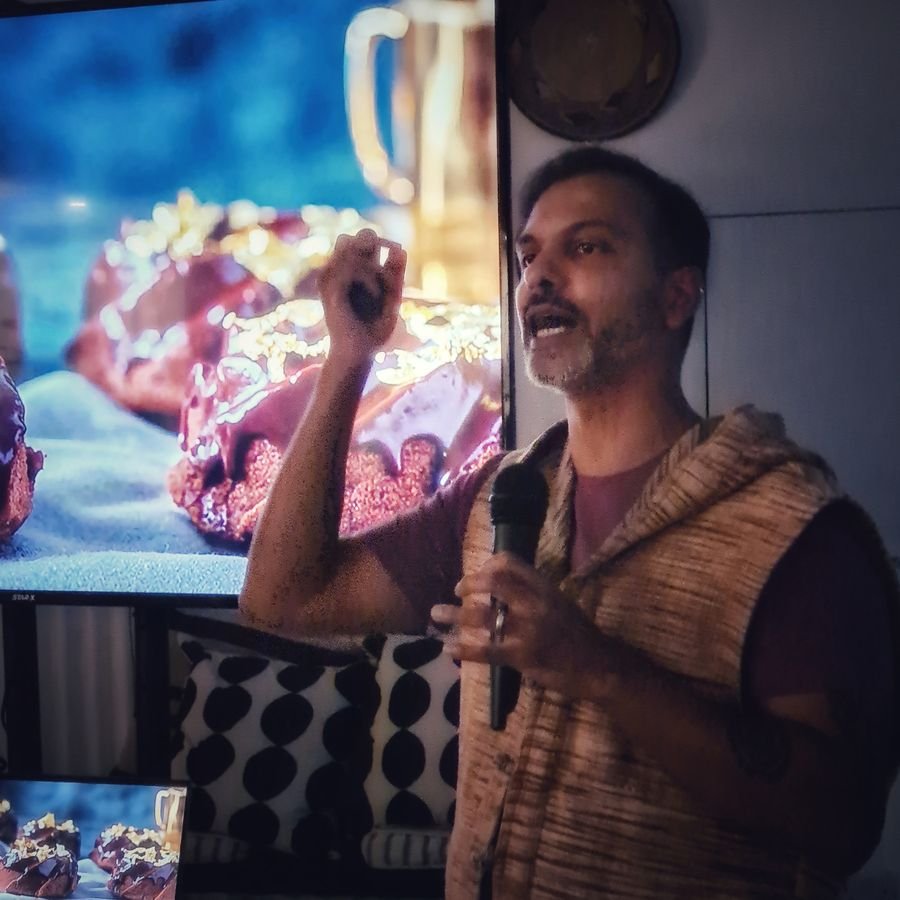
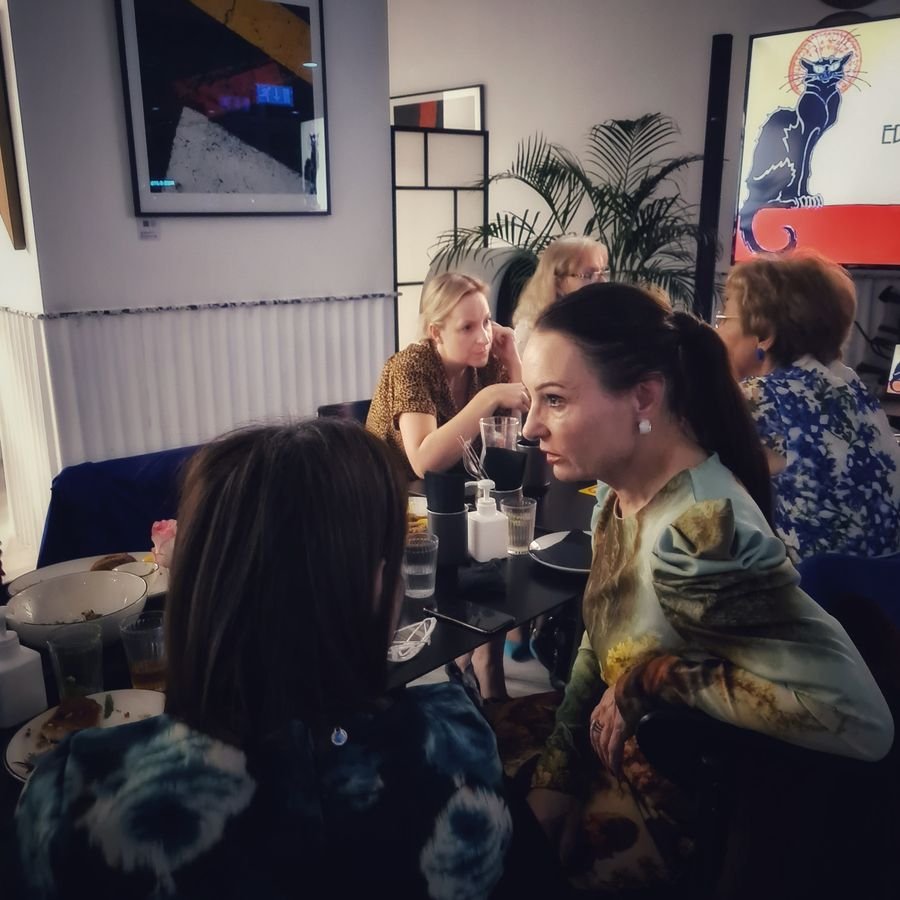
A talk at the Klimt evening
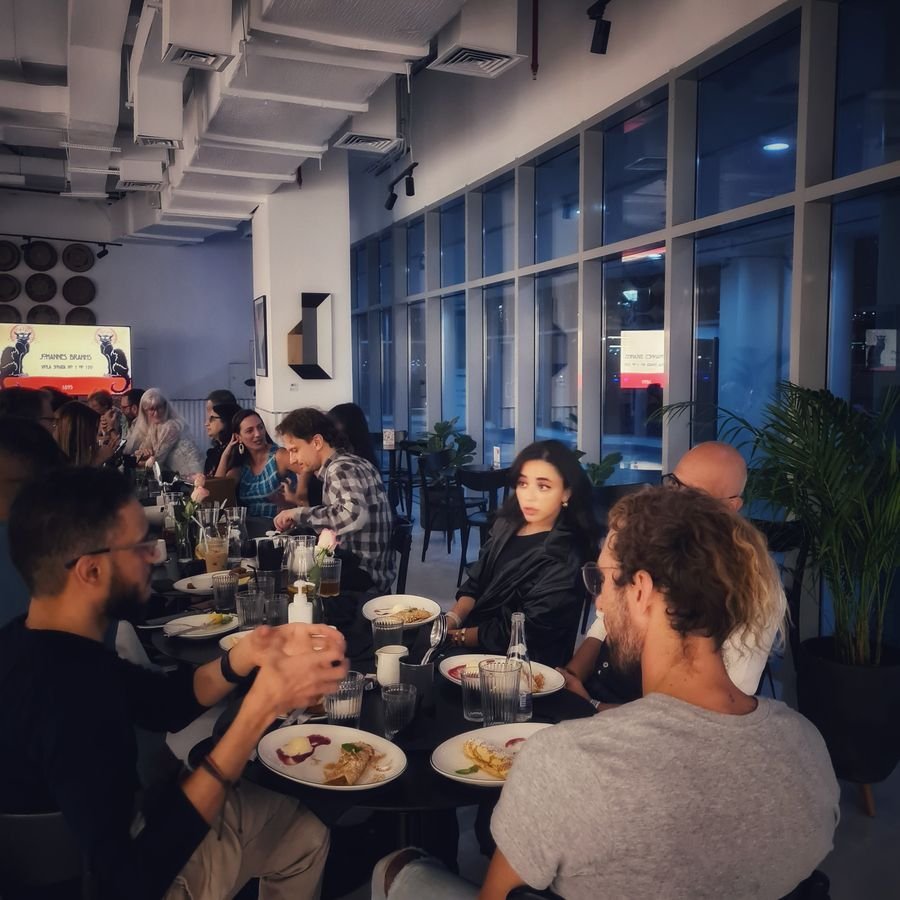
Guests at the long table
A guest at dinner
A talk in front of The Kiss on screen
A talk on Sigmund Freud
A talk on The Age of Insight
A guest at the table
Dinner at the long table
Guests at the table
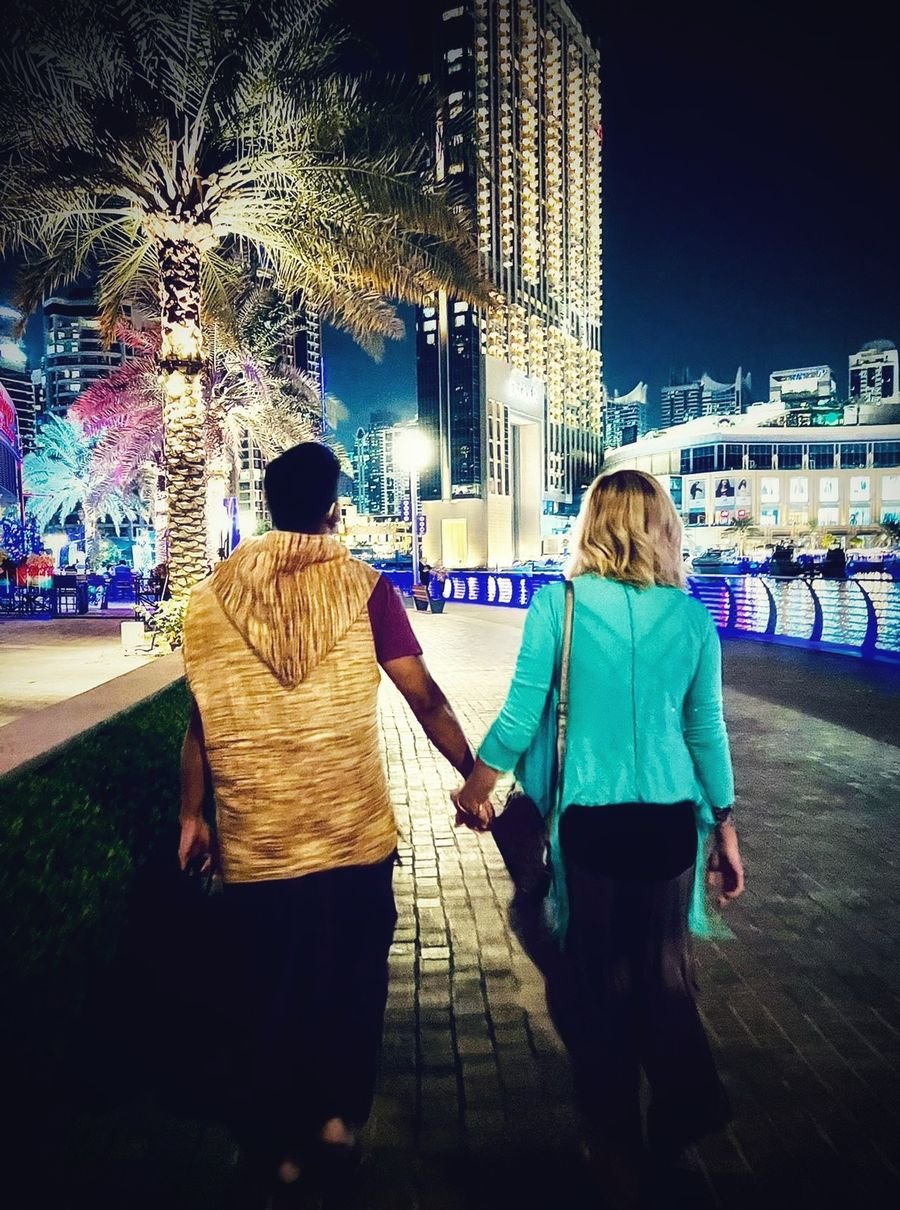
Walking out into the night after the evening

Fin-de-siècle music

The sound of the evening.

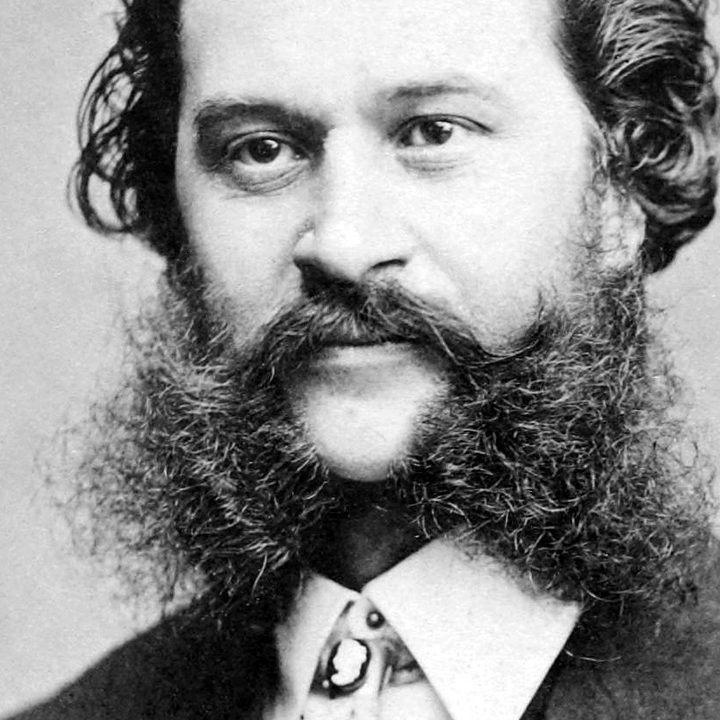
  • Johann Strauss
    Johann StraussVienna
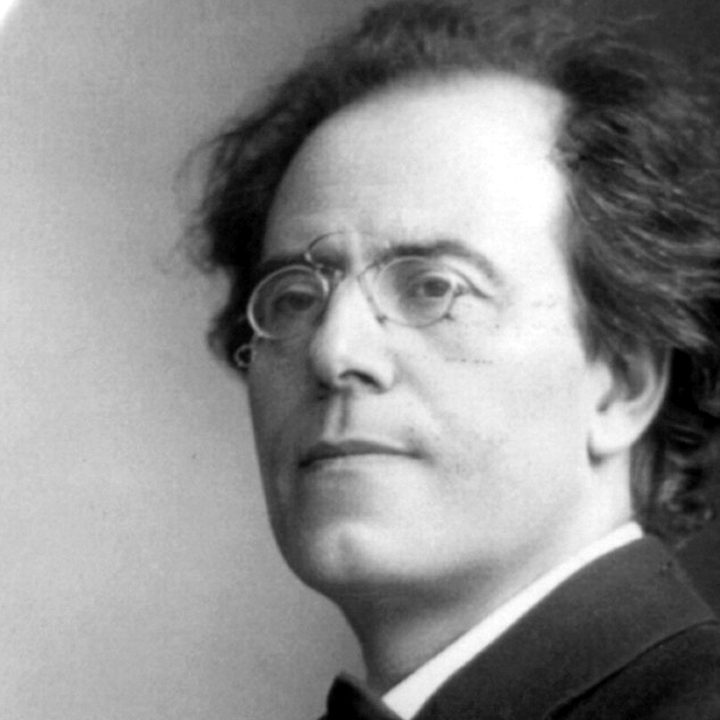
  • Gustav Mahler
    Gustav MahlerVienna
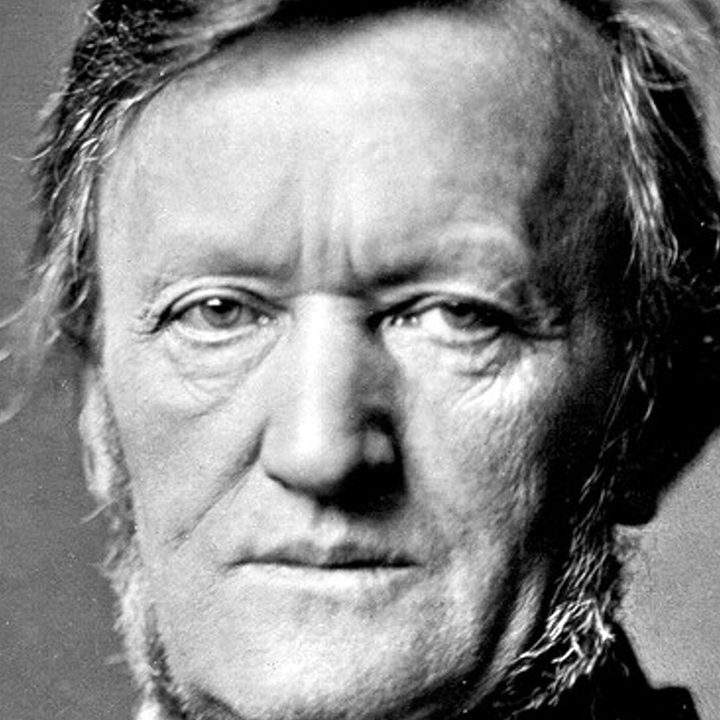
  • Richard Wagner
    Richard WagnerBayreuth
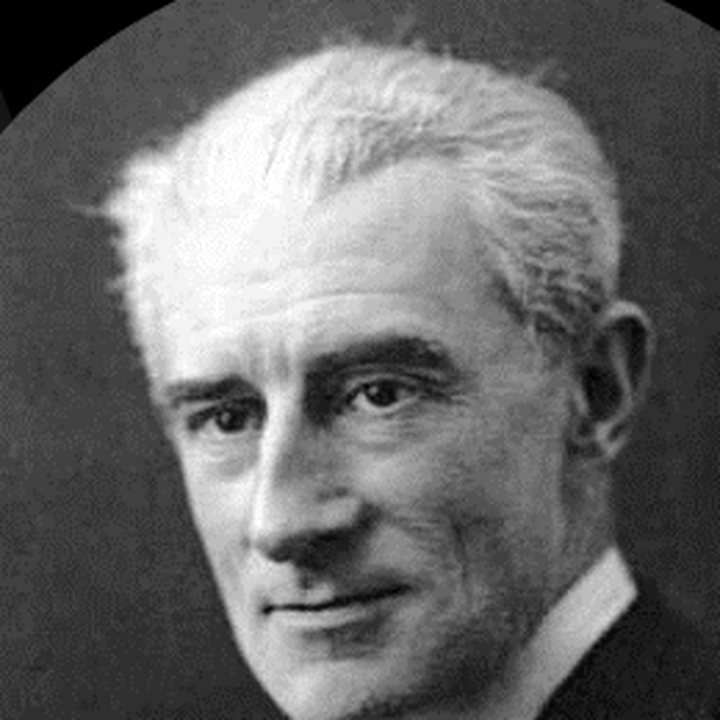
  • Maurice Ravel
    Maurice RavelParis
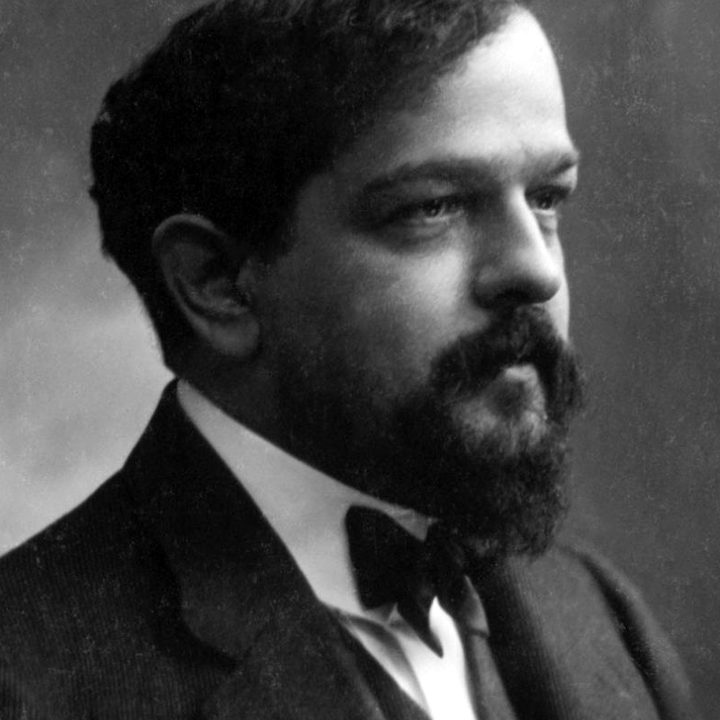
  • Claude Debussy
    Claude DebussyParis

The finale

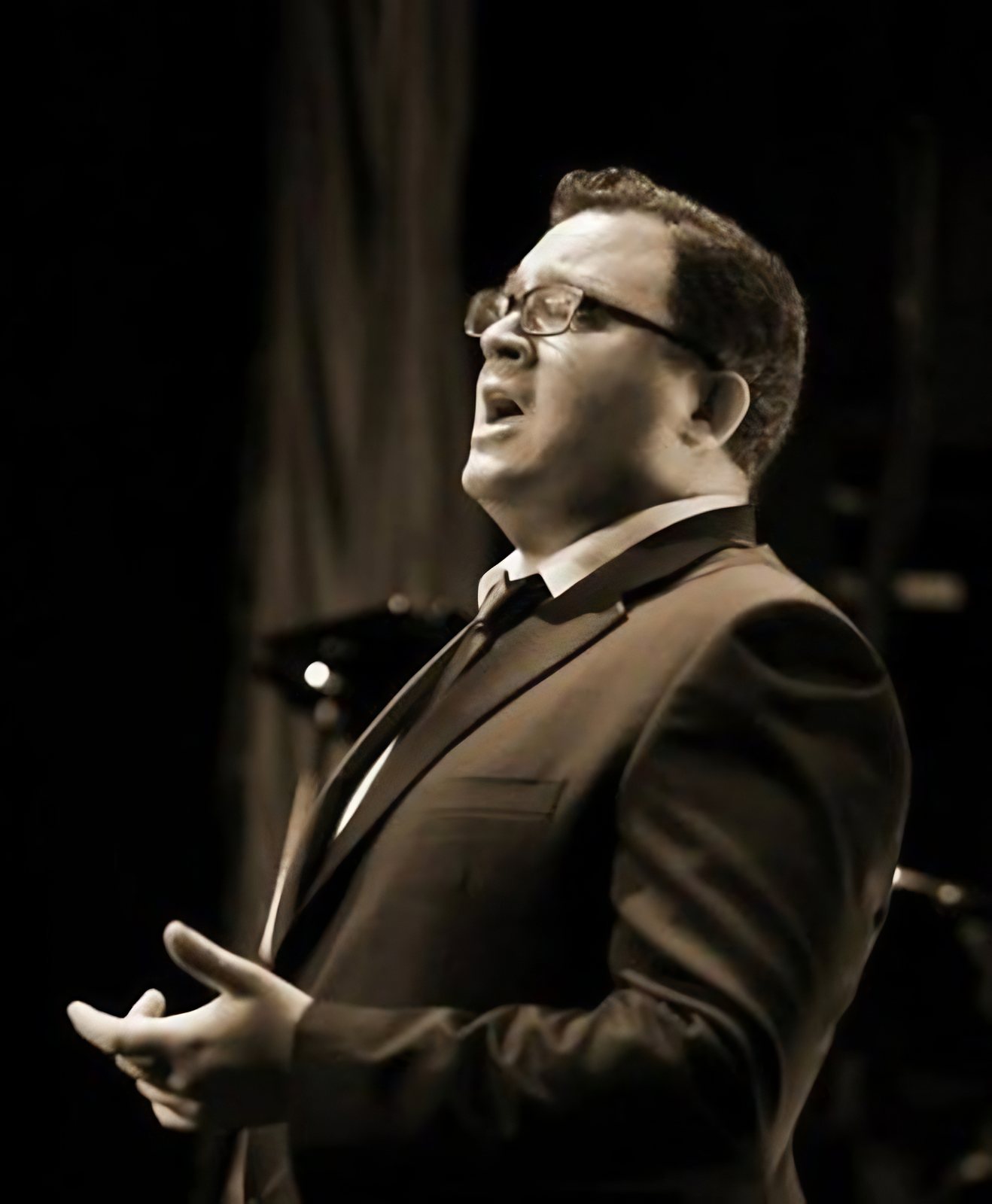
Paul Bester performing

Paul Bester

The evening culminated in a special operatic performance by Paul Bester, who has called the UAE home since 2013. He has shared the stage with Andrea Bocelli, sung Olaf the Snowman in Disney's Frozen in concert, and is a proud member of the Emirates Opera Project.

“Art is a line around your thoughts.”

Gustav Klimt

Project Tesseract · Nº 01

And out, into the night.

All 13 eventsNext · Nº 02 Burn Gloriously →