The divided self
Identity, alienation and the fragmented psyche in The Bell Jar and Plath’s poetry.
Project Tesseract Nº 05 · Poetry × Mind
Inside the mind of a poet. A psychological and psychoanalytic exploration of Sylvia Plath’s life, poetry, and the extraordinary complexity of the human mind.
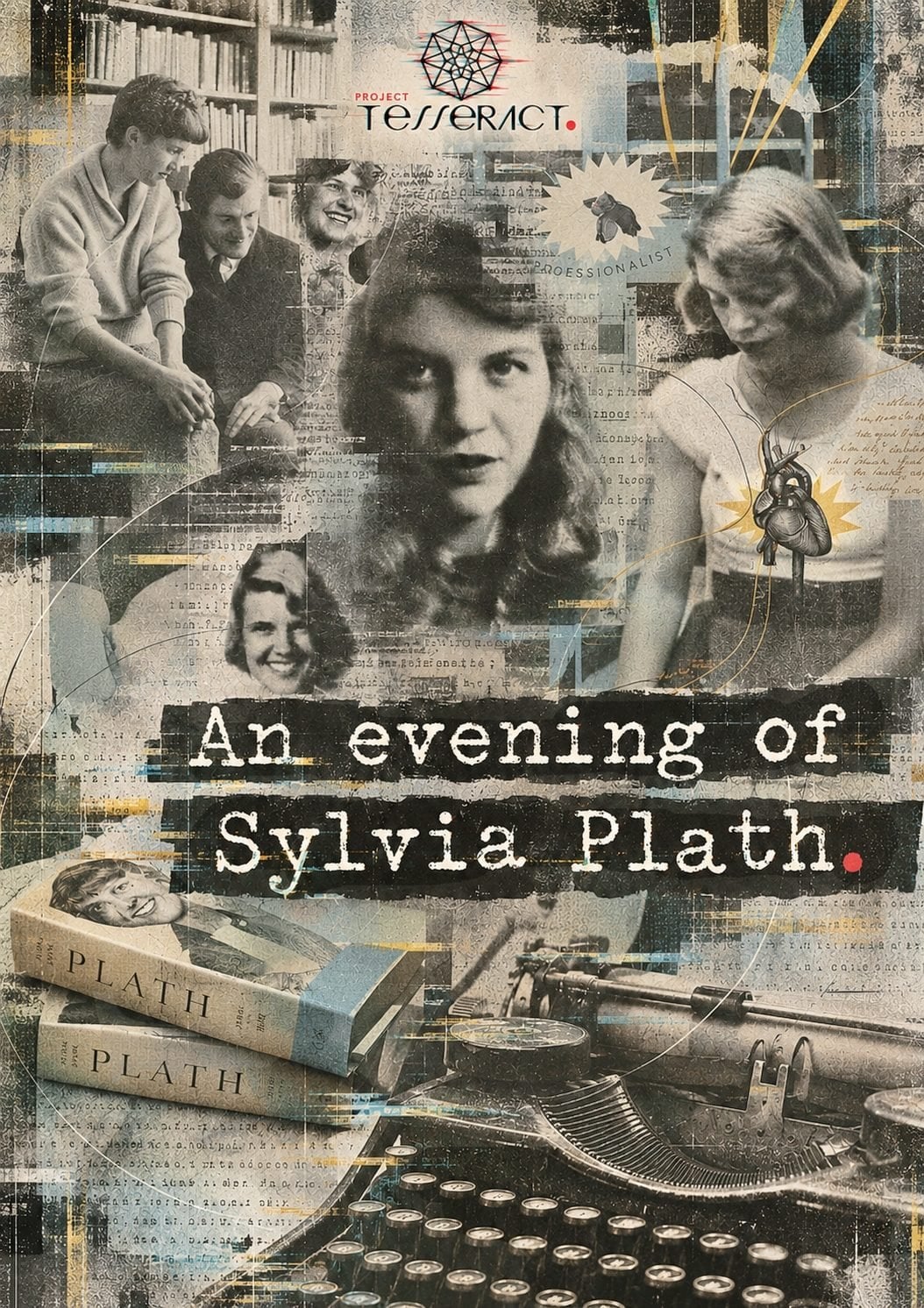
“I took a deep breath and listened to the old brag of my heart.I am, I am, I am.”Sylvia Plath, The Bell Jar (1963)
Who she was
Sylvia Plath was an American poet, novelist and short-story writer. She wrote with clinical precision about the most private parts of the mind: fear, rage, love, despair and the wish to be reborn.
Her life was short. Her work changed what a poem was allowed to say.
27 October. Her father, Otto Plath, is a biology professor and an expert on bees.
She studies English on a scholarship and is already publishing poems and stories.
A Fulbright scholarship takes her to Newnham College. There she meets the poet Ted Hughes. They marry in 1956.
Her first collection of poems.
Her only novel appears in January, under the name Victoria Lucas. She dies in London on 11 February, aged 30.
The poems of her last months are published. They make her name.
Her Collected Poems wins the Pulitzer Prize for Poetry. She is the first poet to win it after her death.
Where the science comes in
Otto Plath was an entomologist. In 1934 he published Bumblebees and Their Ways, a scientific study of the bumblebee. He died when Sylvia was eight.
In 1962 she kept bees of her own, in Devon. That summer she wrote five bee poems. She placed them at the end of the book she was making, the book that became Ariel.
A father’s science, turned into a daughter’s poetry: the meeting of two cultures that Project Tesseract is about.
What we explored
Drawing on the ideas of Sigmund Freud, Carl Jung and contemporary psychological theory, we examined how Plath transformed personal anguish into some of the twentieth century’s most powerful poetry.
Identity, alienation and the fragmented psyche in The Bell Jar and Plath’s poetry.
Freudian and Jungian readings of symbolism, dreams, repression and the shadow self.
Grief, family relationships and the psychological dimensions of Daddy and Lady Lazarus.
Emotional suffering, artistic expression and literary genius, without romanticising mental illness.
Gender, societal expectations, motherhood and the struggle for autonomy in Plath’s writing.
Plath as a complex artist, not a life and a body of work reduced to her death.
The evening
Few poets have explored the depths of human consciousness with the intensity, vulnerability and linguistic brilliance of Sylvia Plath. Her poetry offers a remarkable window into questions of identity, depression, trauma, desire, creativity and the unconscious.
We spent an intellectually stimulating evening exploring Plath’s turbulent life and extraordinary literary legacy through the intersecting lenses of psychology, psychoanalysis and literature.
The evening’s programme
Your turn
Her poems are made for the voice. Start with one, read it aloud in an empty room, and listen to it.
The first book of poems.
The novel, a summer in New York and what follows.
The last poems, and the bees.
Everything, in order. Pulitzer Prize, 1982.
Project Tesseract · Nº 05